Wall Mounted Hose Reel
Symbolbild (Stockfoto); nicht das abgebildete Produkt.
Kinks Come From Storage, Not The Hose
A hose coiled loosely on the ground develops permanent kinks at the points where it folds, and those kinks restrict flow and eventually split the hose.
A reel holds the hose in a consistent curve with no sharp folds, which prevents the damage rather than working around it.
That is why a cheap hose on a reel frequently outlasts an expensive hose left in a heap, and it is the more useful purchase of the two.
Retracting Against Hand Wound
Retracting reels pull the hose back automatically, which is genuinely convenient and introduces a spring mechanism that eventually fails.
Hand-wound reels have nothing to break and require the winding that people avoid, which is why hoses end up on the ground beside them.
A retracting reel gets used because it is effortless, and that behavioural difference usually outweighs the mechanical risk.
Wall Fixing And What It Pulls Against
A full reel of hose is heavy and a pulled hose applies considerable leverage to the bracket, which loosens fixings into soft mortar over time.
Fixing into brick rather than mortar, with appropriate plugs, is what holds, and a bracket pulling out of a wall takes the mortar with it.
Swivelling brackets let the reel turn to follow the hose, which reduces the sideways force on the fixing considerably.
Diameter, Length And Pressure Loss
A long thin hose loses meaningful pressure over its length, and a sprinkler at the end of thirty metres of narrow hose performs noticeably worse than at ten.
A wider bore hose reduces that loss and is heavier and less flexible, which is the trade involved.
Buying considerably more length than a garden needs costs pressure, weight and storage for no benefit at all.
Winter, Frost And Splitting
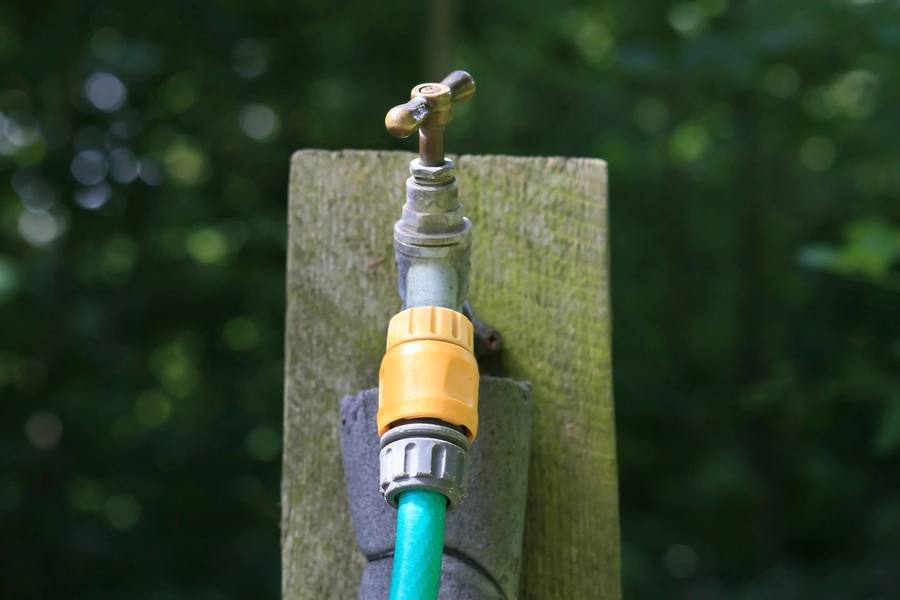
Water left in a hose freezes and expands, which splits the hose and can damage fittings and an outside tap.
Draining the hose and isolating and draining the outside tap before a freeze prevents it, and it is the commonest avoidable garden failure over winter.
Hoses left in sunlight degrade too, and a reel with a cover or a shaded position extends hose life by years.
Fitting quality determines whether a system leaks, and the snap connectors sold with cheap sets are frequently the weak point rather than the hose or the reel. Brass fittings cost a few times more than plastic and seal reliably for years where plastic ones develop drips at the collar. A connection that sprays at the tap every time it is used is irritating enough to stop a hose being used at all.
Hose material determines kinking as much as storage does, since reinforced multi-layer hoses resist folding where cheap single-wall ones crease permanently at the first sharp bend.
Guide arms on better reels feed the hose evenly across the drum, which stops it bunching at one side and jamming the retraction.
The Verdict
A genuine upgrade because it prevents the damage that ruins hoses, and the retracting versions get used where manual ones do not.
Retracting springs fail eventually, brackets pull out of soft mortar, and frozen water splits hoses over winter.
Drain it before a freeze. A hose full of water splits, and so can the outside tap it is attached to.
Auf einen Blick
Vorteile
- Prevents the kinks that ruin hoses
- Keeps the hose off the ground and out of the way
- Retracting versions get used effortlessly
- Covers protect the hose from sunlight
Nachteile
- Retraction springs fail over years
- Brackets pull out of soft mortar
- Long thin hoses lose meaningful pressure
- Splits if not drained before a freeze
Häufig gestellte Fragen
Why does my hose kink?
Storage rather than the hose. Coiled loosely on the ground it folds sharply at the same points, and those kinks become permanent, restrict flow and eventually split. A reel holds a consistent curve and prevents it.
Retracting or hand wound?
Retracting, usually. The spring will fail eventually, and until then the reel actually gets used — hand-wound reels require winding that people avoid, which is why hoses end up in a heap beside them.
What do I do before winter?
Drain the hose completely, and isolate and drain the outside tap. Water freezes and expands, splitting the hose and potentially the tap and fittings too. It is the commonest avoidable garden failure over winter.
Spezifikationen
| Type | Wall mounted hose reel |
| Prevents | Permanent kinks from ground storage |
| Retracting | Effortless; spring eventually fails |
| Hand wound | Nothing to break; often unused |
| Fixing | Into brick, not mortar |
| Bracket | Swivelling reduces side load |
| Length | Buy only what the garden needs |
| Winter | Drain hose and isolate the tap |
Fazit
Stops the kinks that kill hoses. Drain everything before the first freeze or you replace hose and tap.
Preis auf Amazon prüfen