Oscillating Lawn Sprinkler
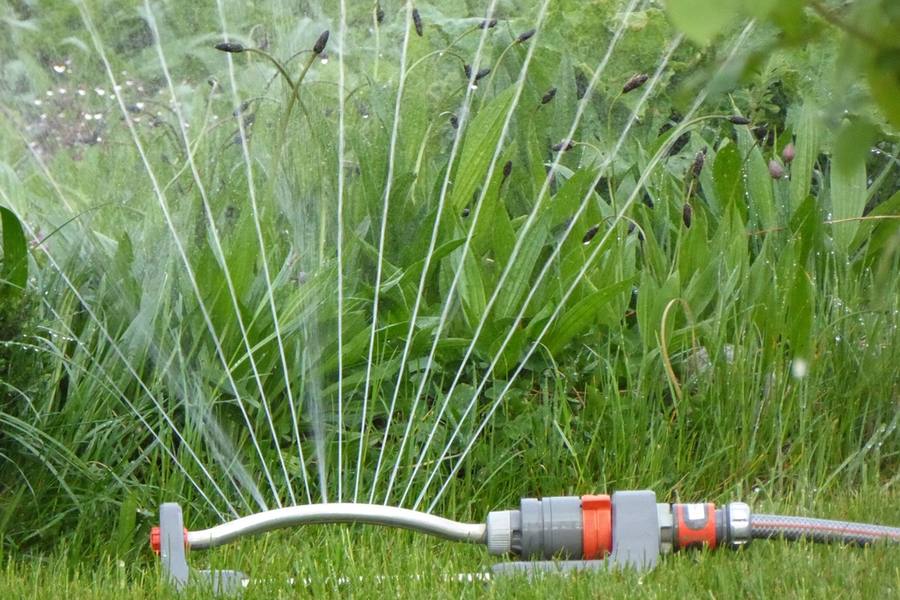
Representative image (stock photo); not the exact product.
Deep And Infrequent Beats Little And Often
Light daily watering wets only the surface, which encourages roots to stay shallow and makes a lawn far less able to survive a dry spell.
A long soak once or twice a week drives water deep, which draws roots down and produces grass that copes with heat without help.
That is the opposite of what most people do, and daily sprinkling is actively worse than watering thoroughly and then leaving it alone.
Knowing How Much Has Been Applied
Judging watering by how wet the surface looks is unreliable, since a surface can look soaked with almost nothing having penetrated.
Placing an empty tin on the lawn and measuring what collects gives an actual figure, and around fifteen to twenty millimetres per session is a reasonable target.
That five-minute test tells you how long your sprinkler needs to run, and afterwards the timing is known rather than guessed.
Evaporation, Wind And Timing
Watering in the middle of a hot day loses a large proportion to evaporation before it reaches soil, and wind carries spray away from the target entirely.
Early morning is the best time, since soil is cool, wind is usually lightest and foliage dries as the day warms.
Evening watering leaves grass wet overnight, which encourages fungal disease and slugs and is the second-best option rather than the first.
Coverage Shape And Overlap
Oscillating sprinklers cover a rectangle, which suits most lawns and wastes water on paths and borders at the edges.
Adjustable width and range let the pattern match the lawn, and a sprinkler run at full width on a narrow lawn waters the fence.
Coverage is uneven within the pattern, heavier near the sprinkler and lighter at the edges, which means overlapping positions rather than placing them edge to edge.
Restrictions And Alternatives
Hosepipe bans prohibit sprinkler use in many areas during drought, and a lawn under those conditions goes brown and recovers when rain returns.
A brown summer lawn is dormant rather than dead in almost all cases, and watering it is largely a cosmetic choice rather than a necessary one.
Established lawns recover reliably, and newly laid turf or seed genuinely does need watering through establishment regardless of appearance.
Timer compatibility is worth checking before buying, since a sprinkler used with a tap timer becomes something that runs at five in the morning without anybody being awake. That is both the most efficient time and the time nobody chooses voluntarily, which is exactly the kind of problem automation solves. A basic mechanical timer costs very little and does the job adequately.
Pulsating and rotary sprinklers cover circles rather than rectangles and throw considerably further, which suits large open lawns where an oscillating bar would need moving repeatedly.
New turf and seed are the genuine exception to infrequent watering, needing light frequent watering until roots establish, after which the usual deep pattern takes over.
The Verdict
Effective for keeping a lawn green where that matters, provided watering is deep and infrequent rather than daily.
Daily light watering produces shallow roots, midday watering evaporates, and coverage is uneven within the pattern.
Water deeply once a week, not lightly every day. Daily sprinkling makes a lawn less able to cope with drought.
At a glance
Pros
- Covers a rectangular lawn evenly enough
- Adjustable width and range reduce waste
- Cheap, simple and nothing to break
- Deep soaking drives roots down
Cons
- Daily light watering produces shallow roots
- Heavy evaporation loss in midday heat
- Coverage is heavier near the sprinkler
- Prohibited during hosepipe restrictions
Frequently asked questions
How often should I water the lawn?
Deeply once or twice a week rather than lightly every day. Light daily watering keeps roots shallow and leaves a lawn far less able to survive heat; a long soak drives roots down.
How long should I run it?
Put an empty tin on the lawn and measure. Around fifteen to twenty millimetres per session is a reasonable target, and once you know how long your sprinkler takes to deliver that, the timing is known rather than guessed.
My lawn has gone brown — is it dead?
Almost certainly dormant, and it will recover when rain returns. Watering it is largely cosmetic for an established lawn. Newly laid turf or seed is the exception and genuinely needs water through establishment.
Specifications
| Type | Oscillating rectangular sprinkler |
| Correct pattern | Deep and infrequent |
| Target | About 15-20 mm per session |
| Measurement | A tin on the lawn |
| Best time | Early morning |
| Avoid | Midday heat and wind |
| Coverage | Overlap positions rather than abut |
| Brown lawns | Usually dormant, not dead |
The bottom line
Deep once a week beats light every day. Measure with a tin once and you never have to guess again.
Check Price on Amazon